designer profile
Christian Dior
The New Look and the architecture of femininity: how ten years of one couturier's work changed postwar fashion, the economy of haute couture and the very model of the global fashion house
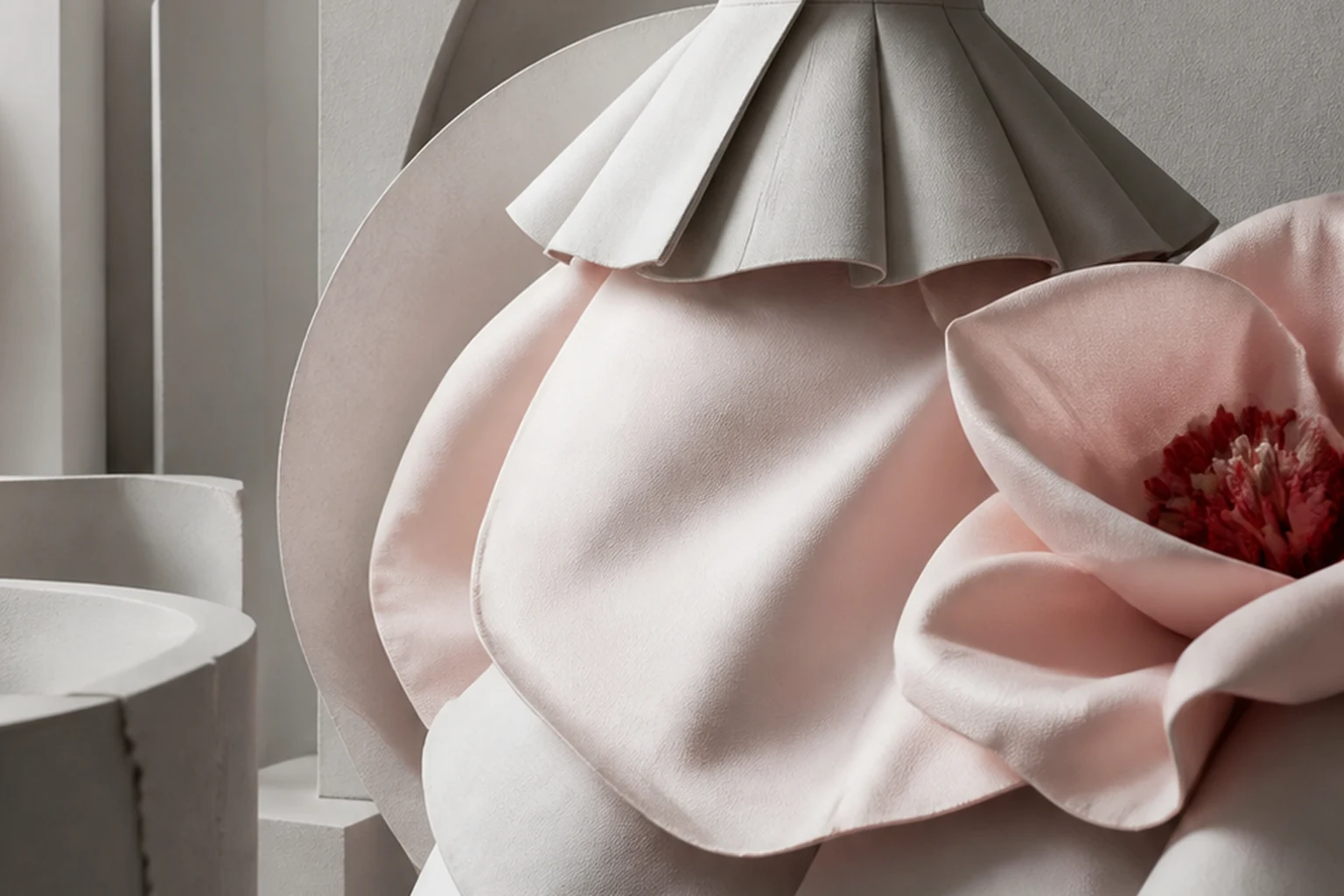
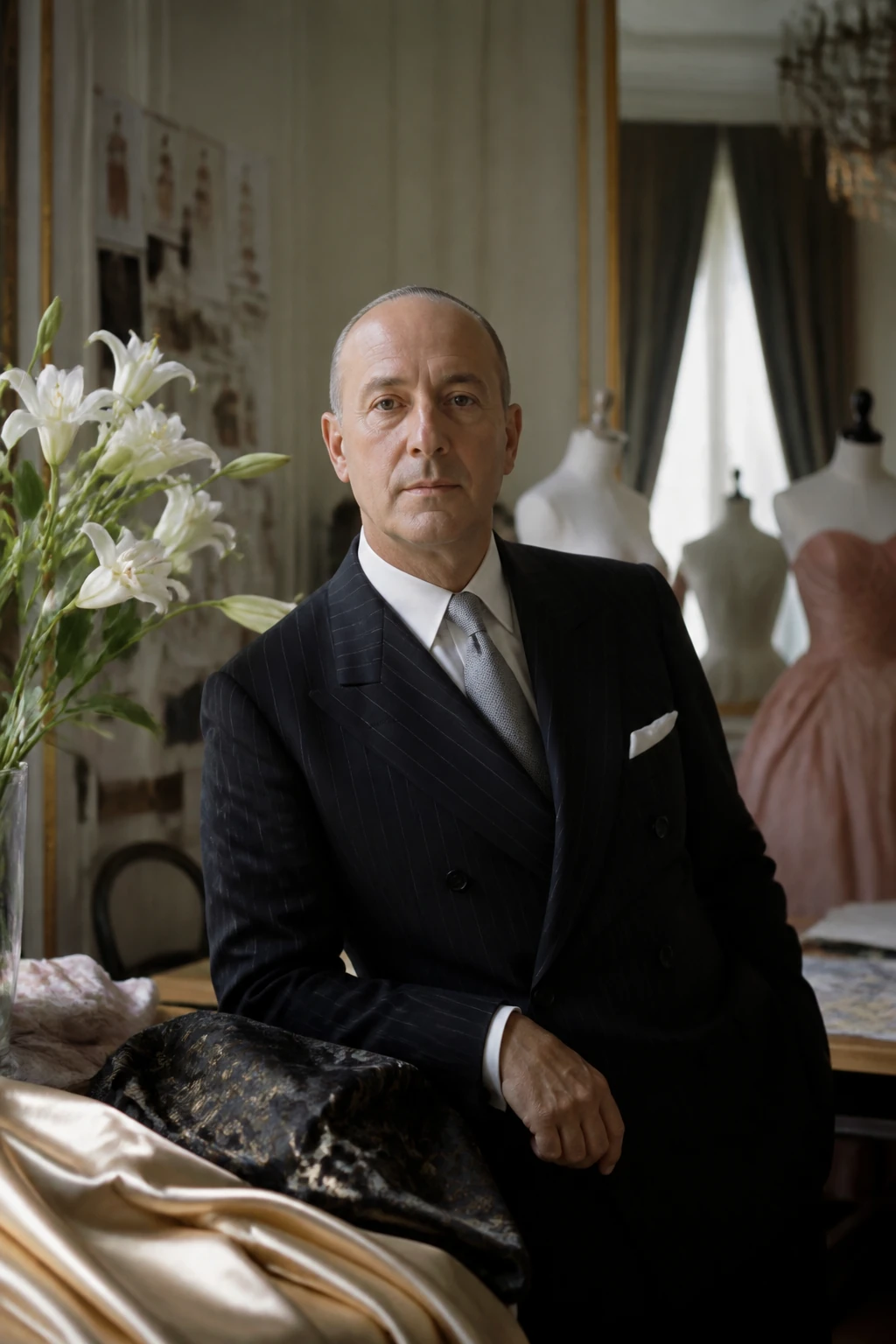
Dior changed fashion not only through the New Look silhouette. He built a system in which form, craft, image, fragrance, licensing and international distribution worked as a single architecture of the house.
Editorial thesis
Christian Dior's historical significance cannot be reduced to a single 1947 collection. He restored the prestige of Parisian haute couture after the war, turned the silhouette into a cultural event and at the same time created a scalable business system: ateliers, fragrance, accessories, licences, international branches and the public mythology of the house. His personal career lasted about ten years, but in that time he formed a mechanism capable of outliving the founder.
Reader question
How did a man who entered fashion after forty change the female silhouette in a single decade, make Paris again the centre of world fashion and create a house that continued to exist after his sudden death?
To trace Dior as designer, entrepreneur, collector and organiser of an institution. The material explains the construction of the New Look, shows the role of Marcel Boussac, the ateliers and the marketing system, analyses the evolution of the lines and separates facts from the later brand legend.
The core subject is Christian Dior (1905-1957): his biography, authorial method and professional activity until his death.
The history of the house after 1957 is included only as context of continuity; it is the subject of a separate institutional article.
The term New Look is used as a name fixed after the show of 12 February 1947, not as the proper name of the whole first collection.
Formulations such as 'returned femininity', 'saved Paris' and 'invented postwar fashion' are replaced by precise historical descriptions.
Licences and international expansion are treated as part of the design of the institution, not as a secondary commercial background.
Every image passes the rights gate; visuals are not embedded in the document.
Short answer
Christian Dior was born on 21 January 1905 in Granville into the wealthy family of an industrialist. He was interested in art, ran galleries in Paris, and after the family's financial collapse began selling fashion drawings. In the late 1930s he worked for Robert Piguet, then for Lucien Lelong. In 1946, with the financial support of the textile entrepreneur Marcel Boussac, he founded his own house at 30 Avenue Montaigne.
On 12 February 1947 Dior showed the first collection, Corolle and En 8. The Harper's Bazaar editor Carmel Snow called the new look the New Look. Narrow shoulders, a high bust, an emphasised waist and a long wide skirt differed sharply from wartime fabric economy. Over the following ten years Dior constantly changed the lines — from Tulip and Oblique to H, A and Y — developed fragrance, accessories and licences and created an international network. He died on 24 October 1957 in Italy. The house continued to work under Yves Saint Laurent, proving that Dior had managed to build not only an authorial style but a durable institution.
1. Granville: family, sea and garden
Christian Ernest Dior was born on 21 January 1905 in Granville, Normandy. His father Maurice Dior ran a successful fertiliser business, and his mother Madeleine looked after the home and the garden of the Villa Les Rhumbs. [1][2]
The garden, the sea climate and the architecture of the villa became durable sources of the future visual language. Dior later connected his love of flowers, of pink and grey shades and of structured beauty with his childhood in Granville.
It is important not to turn the childhood impressions into a direct causal scheme. They became part of the authorial mythology only after Dior had formed as a designer, but the museum archives confirm that flowers and the garden did occupy a central place in his memory and work.
2. Paris, education and the artistic environment
The family moved to Paris, where Dior studied at the École des Sciences Politiques at his parents' wish. A diplomatic career did not attract him: he was involved in the artistic and literary environment, visited galleries and supported young authors.
His early taste formed not in a fashion school but through art, theatre, interior and collecting. This explains his later ability to build a collection as a coherent image rather than only as a set of dresses.
The Paris of the 1920s gave him a network of contacts that later proved important for the fashion house: artists, decorators, photographers, writers and members of the wealthy public.
3. The galleries of Jacques Bonjean and Pierre Colle
In 1928 Dior, with his father's support, opened a gallery together with Jacques Bonjean. Later he worked with Pierre Colle. The galleries showed contemporary art, including works by Picasso, Braque, Cocteau, Dalí, Miró and other authors. [2][3]
The gallery experience taught Dior selection, hanging, the building of an author's reputation and working with a limited circle of clients. These skills transferred directly into the future haute couture system.
The gallery also formed an understanding of cultural capital: an object gains value not only from its material but from the context, criticism, space and history around it.
4. The family's collapse and the turn to fashion illustration
In the early 1930s the family business collapsed, his mother died, and Dior was forced to close the gallery. A period of illness and financial instability sharply changed his social position.
He began selling drawings to fashion houses and newspapers. Hat sketches brought a steady income and helped him enter the professional couture network.
The transition from gallerist to illustrator shows an important trait of Dior: he entered fashion not through a family atelier but through visual thinking, observation and an ability to adapt quickly.
5. Robert Piguet and the first professional lessons
In 1938 Robert Piguet invited Dior to work as a designer. Here he created models, among which Café Anglais is often mentioned. [2][4]
Piguet gave him the experience of the seasonal collection, work with the ateliers and the professional discipline of a house. Dior later called him the man who taught him simplicity and elegance.
The work was interrupted by mobilisation in 1940. This short period nevertheless became a transition from drawing to the real production of clothing.
6. The war years and the House of Lucien Lelong
After demobilisation Dior entered the House of Lucien Lelong in 1941, where he worked alongside Pierre Balmain. Parisian couture during the occupation existed within a complex system of restrictions, orders and political pressure. [4][5]
Lelong defended the preservation of the Parisian ateliers and employment, resisting the plans to move the industry to Berlin. Dior worked within this system, creating clothing for the house's clients.
This period requires precision: participation in a working couture house is not the same as political support for the occupation regime, but the industry itself was embedded in the economy of occupied Paris.
7. Marcel Boussac and the founding of the house
In 1946 the textile magnate Marcel Boussac proposed that Dior take over the old house of Philippe et Gaston. Dior refused to relaunch someone else's name and insisted on creating the House of Christian Dior. [1][2]
Boussac provided substantial capital and production support. For him the new house was also a way of stimulating demand for French fabrics; for Dior it was an opportunity to build an institution according to his own taste.
The company was founded on 8 October 1946, and the house was located at 30 Avenue Montaigne. Boussac's financial role does not diminish Dior's authorship, but destroys the myth of a solitary start.
8. 30 Avenue Montaigne: the architecture of the institution
The townhouse on Avenue Montaigne was decorated as a modern house with an eighteenth-century atmosphere: grey walls, white panelling, medallion chairs, Neoclassical details. The interior created a feeling of tradition even before the brand's historical heritage existed.
The space united the salon, fitting rooms, ateliers, administrative services and the show stage. A client entered not simply a shop but a carefully organised ritual of haute couture.
The architecture of the house became part of the product: the address, stairway, furniture, packaging and service formed trust and status just as a dress did.
9. 12 February 1947: Corolle and En 8
The first collection was shown on 12 February 1947 and consisted of the lines Corolle and En 8. The name Corolle meant the corolla of a flower, En 8 the form of the number eight, emphasising the bust and hips around a narrow waist. [1][2][6]
After the show Carmel Snow, the editor-in-chief of Harper's Bazaar, spoke the phrase that became fixed as the New Look. The term quickly turned into the media name of the whole aesthetic.
The collection became an international event because it offered a visual break with the wartime wardrobe: long skirts, rounded shoulders, complex inner constructions and the demonstrative use of fabric.
10. What exactly was new in the New Look
The New Look was not wholly unprecedented: the narrow waist, corset construction and long skirt had historical analogues, and some designers were already moving towards a more feminine silhouette.
The novelty lay in the concentration, scale and moment. Dior joined historical forms, technical quality and media presentation into a clear postwar image that could be instantly recognised and reproduced.
His silhouette worked as a social statement: it returned excess, ceremonial quality and complex labour at a moment when Europe was still living with the consequences of scarcity.
11. The Bar suit as a constructive manifesto
The Bar suit from the Corolle line became the principal visual symbol of the first collection: a cream shantung jacket, a black pleated wool skirt, a hat and shoes. [6][7]
The jacket rested on an inner frame, softly rounded the shoulders, emphasised the bust and narrowed sharply at the waist, passing into a peplum over the hips. The skirt required a large amount of fabric and created a heavy, controlled movement.
The Bar suit matters not as a universal image of the female body but as a precise construction in which the inner structure turned into a public sign of a new era.
12. Criticism: fabric, body and the postwar economy
The New Look drew delight and protest. It was criticised for the use of fabric, the return of the corset and the creation of an image that required time, money and limited movement.
In the United States and Europe there were protests against long skirts; governments and the press discussed the economic permissibility of the new fashion. At the same time the market quickly adapted the silhouette into more accessible versions.
The criticism shows that the New Look was not a neutral beauty but a politics of the body and of resources. Its success depended on society's wish to symbolically end wartime economy, but that wish was distributed unevenly.
13. The line as a seasonal method
Dior organised each collection around a leading line. The names helped the press and buyers read the change of silhouette as a coherent system.
A line could be defined by the position of the waist, the direction of the shoulders, the length of the skirt, the geometry of the side profile or the distribution of volume. Such an approach made the seasonal shift visible even without a radical change of the decorative language.
The method turned fashion into a sequence of clearly named visual theses. The house did not simply produce things but explained exactly how the new figure should look.
14. Tulip, Oblique, H, A and Y
After 1947 Dior did not repeat the New Look literally. The Tulip line strengthened the floral roundness, Oblique worked with the diagonal, and the H, A and Y lines of the mid-1950s successively changed the position of the waist and the geometry of the torso. [1][2]
The H-line of 1954 brought the silhouette towards the rectangle; the A-line of 1955 widened downwards; the Y-line of 1955 concentrated volume in the shoulders and narrowed the lower part.
This evolution refutes the idea of Dior as the author of a single formula. He kept an interest in architectural construction, but regularly reassembled the proportions.
15. The flou and tailleur ateliers
The House of Dior worked through the traditional division of haute couture into flou and tailleur. The first ateliers created soft dresses and drapery, the second suits, coats and rigidly constructed forms.
The premières led the teams and translated the sketches into toiles, patterns and finished garments. The authorial idea passed through the collective knowledge of dozens of specialists.
Dior paid attention to the fittings and the general line, but the house was not the workshop of one man. His success depended on an organisational ability to join authorship with professional infrastructure.
16. Colour, flowers and the decorative language
Flowers were one of the principal sources of Dior's form and names. Dresses could recall a tulip, a lily of the valley, a rose or a corolla; the embroideries and prints turned the surface into a garden.
His favourite grey, pink, red and black worked as a system of contrasts. Grey was connected with Paris and the interior of the house, pink with Granville and the body, red with theatrical intensity.
Decoration at Dior was subordinated to the architecture of the silhouette. Even rich embroidery had to strengthen the direction of the form, not dissolve it.
17. Clients, celebrities and the diplomacy of image
Dior dressed the European aristocracy, Hollywood actresses and public figures. Among the clients were Marlene Dietrich, Ava Gardner, Princess Margaret and other celebrities. [2][8]
The house's clothing was used in cinema, official visits and social events, turning couture into an instrument of France's cultural diplomacy.
Celebrity worked not only as advertising. It helped show how the same Dior code operates in different institutional contexts — from the screen to the royal court.
18. Miss Dior and fragrance
The fragrance Miss Dior was presented in 1947 and named after the designer's sister Catherine Dior. It became part of the house almost simultaneously with the fashion. [1][2]
Fragrance widened the audience and carried the atmosphere of couture into a more accessible category. The bottle, name, advertising and scent formed an independent design object.
The launch showed Dior's strategic thinking: the brand was from the start designed as a multi-category system, not only as a salon of individual dresses.
19. Licensing and international expansion
Dior was one of the first to use the licensing of the name systematically for stockings, ties, gloves and other categories. In 1948 Christian Dior New York opened. [1][2]
The licences allowed the rapid spread of the house's aesthetic and the earning of income without full control of production. At the same time they created the risk of diluting the quality and meaning of the name.
This model became the basis of the global luxury business of the second half of the twentieth century. Dior designed not only a collection but a scalable economy of authorship.
20. Photography and the media image of Dior
The photographers, including Willy Maywald, Richard Avedon, Irving Penn and other figures of the fashion press, helped turn Dior into a global visual phenomenon.
Studio photography stressed the line, and street photography contrasted the luxurious silhouette with the modern city. The image made the complex couture construction comprehensible to an audience that would never see the garment in the salon.
The New Look existed at once as clothing and as a media image. Without photography and editorial language its influence would have been considerably narrower.
21. Dior as author and public figure
Unlike the reclusive Balenciaga, Dior actively took part in the public life of the house, gave interviews, wrote texts and formed the image of a benevolent, superstitious couturier sensitive to beauty.
His autobiography and fashion vocabulary turned the personal voice into part of the brand. He explained clothing, colour, etiquette and femininity as a cultural system.
The public image was carefully organised, but not wholly artificial. It connected the personal biography, the garden, art and the house into a single story of origin.
22. The final collection and death
Dior's final collection during his lifetime was autumn-winter 1957-1958. On 24 October 1957 he died suddenly in Montecatini Terme, Italy, at the age of 52. [1][2]
The death created an institutional crisis: the house bore the name of an author who personally approved all the main decisions. Yet the ateliers, management, archive and international network already existed as an independent structure.
In 1957 the artistic direction passed to the twenty-one-year-old Yves Saint Laurent. This decision became the first proof that the Dior system could continue through creative succession.
23. Legacy and the problem of succession
The Dior legacy consists of several levels: the New Look silhouette, the seasonal method of lines, the floral-architectural language, the haute couture ateliers and the business model of the global house.
Each successive head chose different elements: Yves Saint Laurent lightened the construction, Marc Bohan stabilised elegance, Gianfranco Ferré returned architecturality, John Galliano strengthened the theatre, Raf Simons modernist clarity.
Dior should therefore be treated not as a fixed style but as a managed archive in which the legacy is regularly redefined.
24. Myths and contested formulations
A widespread myth claims that Dior single-handedly 'returned femininity' after the war. Such a formula excludes other types of femininity, the work of contemporaries and the social differences between women.
Another myth is that the New Look instantly and completely replaced the wartime wardrobe. In practice the adaptation was gradual, and the mass versions differed from couture in material and construction.
Finally, the commercial expansion is sometimes described as a departure from pure creativity. For Dior it was part of the original project: the house was conceived as a cultural and economic system at once.
25. Conclusion: why Dior outlived its author
Christian Dior worked under his own name for only about ten years, but in that time he created one of the strongest mechanisms of fashion continuity.
He showed that a silhouette can become a public event and that a brand can join hand craft with the industrial logic of distribution. His house depended on couture, but was not limited to it.
Dior's contemporaneity lies not in literally repeating the Bar suit but in the ability to link the archive, the form, the public image and the organisation of the business into one recognisable system.