fashion editor profile
Carine Roitfeld
A stylist who turned selection and assembly of a look into an independent authorial position with a recognisable hand.
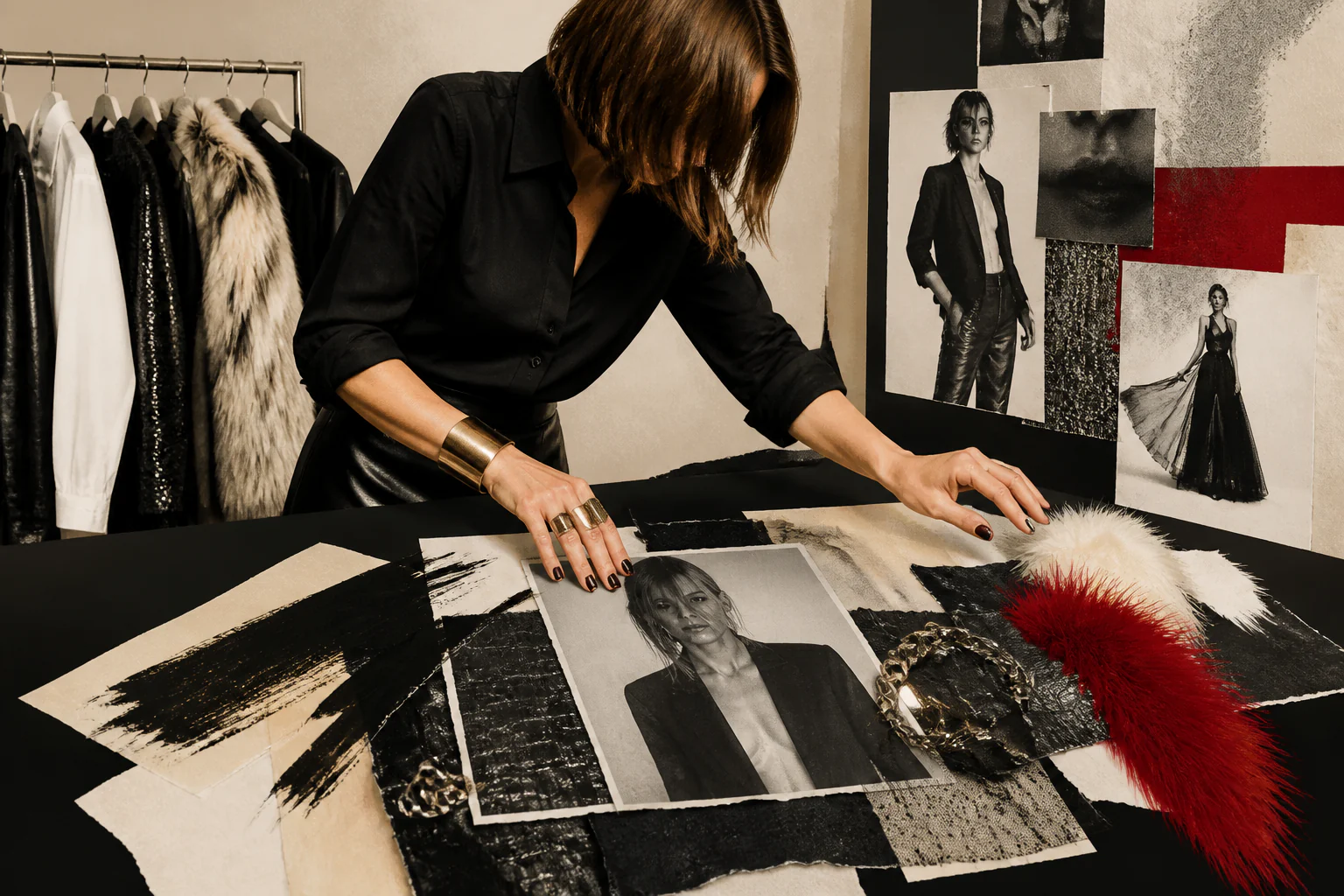
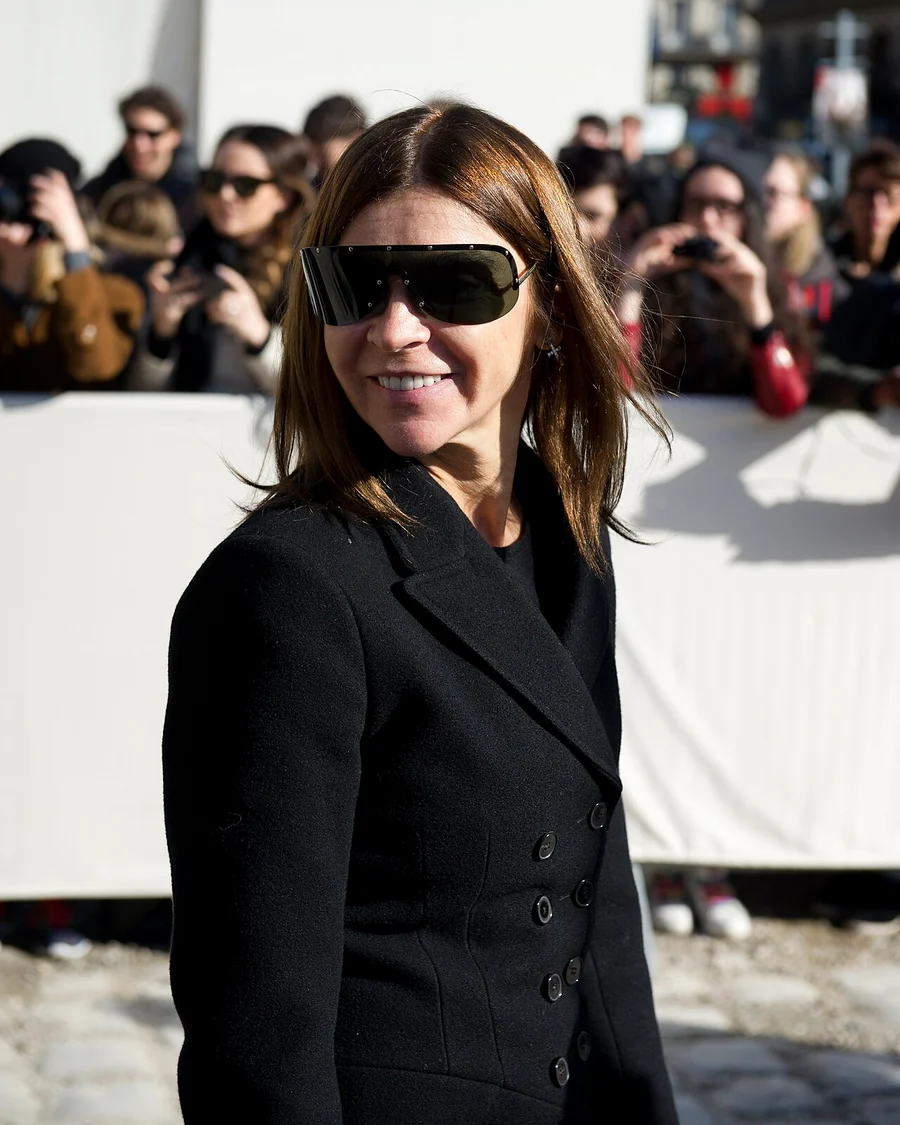
Editorial thesis
Roitfeld matters as the figure who proved a stylist is an author of an image on equal terms with a photographer: assembling a look carries a statement rather than serving one.
Reader question
Who authors a fashion image when the clothing was not chosen by the photographer?
Short answer
Both: the photographer answers for light and frame, the stylist for what is in that frame. The division of roles here is the same as between cinematographer and production designer.
1. Position
Roitfeld works as a fashion editor and stylist and led the French edition of a major magazine for many years. Her case is notable for the move from stylist to editor and then to a brand of her own.
2. Styling as discipline
Choosing clothing, combining brands, layering, and the relation to the body constitute a distinct professional field. Until a certain point it was regarded as technical and did not imply authorship.
3. A recognisable hand
Her work is identified by stable features: a hard sexuality without softness, a narrow silhouette, the combination of severe and explicit. It is the existence of a hand that makes a stylist an author.
4. Attitude to the body
Her shoots consistently present the body as an object and do not soften this. The position provokes justified dispute and is simultaneously the content of the work rather than a side effect.
5. Mixing registers
A device she uses constantly is joining a luxury item with a domestic or vulgar one. The collision of registers produces the tension on which the image rests.
6. Working with photographers
She collaborated with authors whose language matched her own. Coincidence of positions, rather than one subordinating the other, explains the coherence of these shoots.
7. The French edition as position
Under her direction the title occupied a distinctly separate niche inside an international network. A national edition again proved able to have a voice of its own.
8. Departure and an own title
After leaving she founded a publication of her own named by her initials. This transfers authority from a post to a name — the same mechanism as a designer opening a label.
9. A name instead of a post
Her case shows that editorial authority is separable from an institution. This became possible only once the stylist was recognised as an author.
10. Consulting for brands
A significant part of contemporary work by stylists at this level is participation in houses’ campaigns and shows. The boundary between editorial and advertising here blurs structurally.
11. Conflict of interest
A stylist styling a magazine shoot while working for a brand featured in it occupies an unresolved position. The industry acknowledges the problem and does not resolve it.
12. Casting as decision
Choosing a model falls within her remit and carries the same weight as choosing clothing. It is here that styling meets the politics of representation.
13. What transfers
The recognition of styling as authorial work with a credit transfers. This is a change in attribution practice applicable to any publication.
14. What does not transfer
The personal authority to dictate terms does not transfer. It was accumulated through institutional position and does not travel with the method.
15. Critique
A justified objection: her language reproduces a narrow norm of body and age. The expansion of representation that occurred in the industry did not run through her work.
16. A second objection
The aestheticisation of coercion and power in her shoots has been assessed as problematic. That dispute remains substantive and is not settled by appeal to artistic freedom.
17. Historical position
She stands at the point where styling moved from service to authorship. After her a stylist’s name appears alongside a photographer’s, and that is her structural contribution.
18. Link to the knowledge base
The material connects to the entries on fashion photography, art direction, the cover, and the magazine as a production system.
19. How to read this today
Look at the credits of a shoot. A stylist’s name beside a photographer’s is a direct consequence of the shift her case marked.
20. A test question
Ask who chose the clothing and who chose the model. The answer determines authorship of an image more precisely than its caption.