photographer profile
Helmut Newton
Power, eroticism and the staging of the modern woman
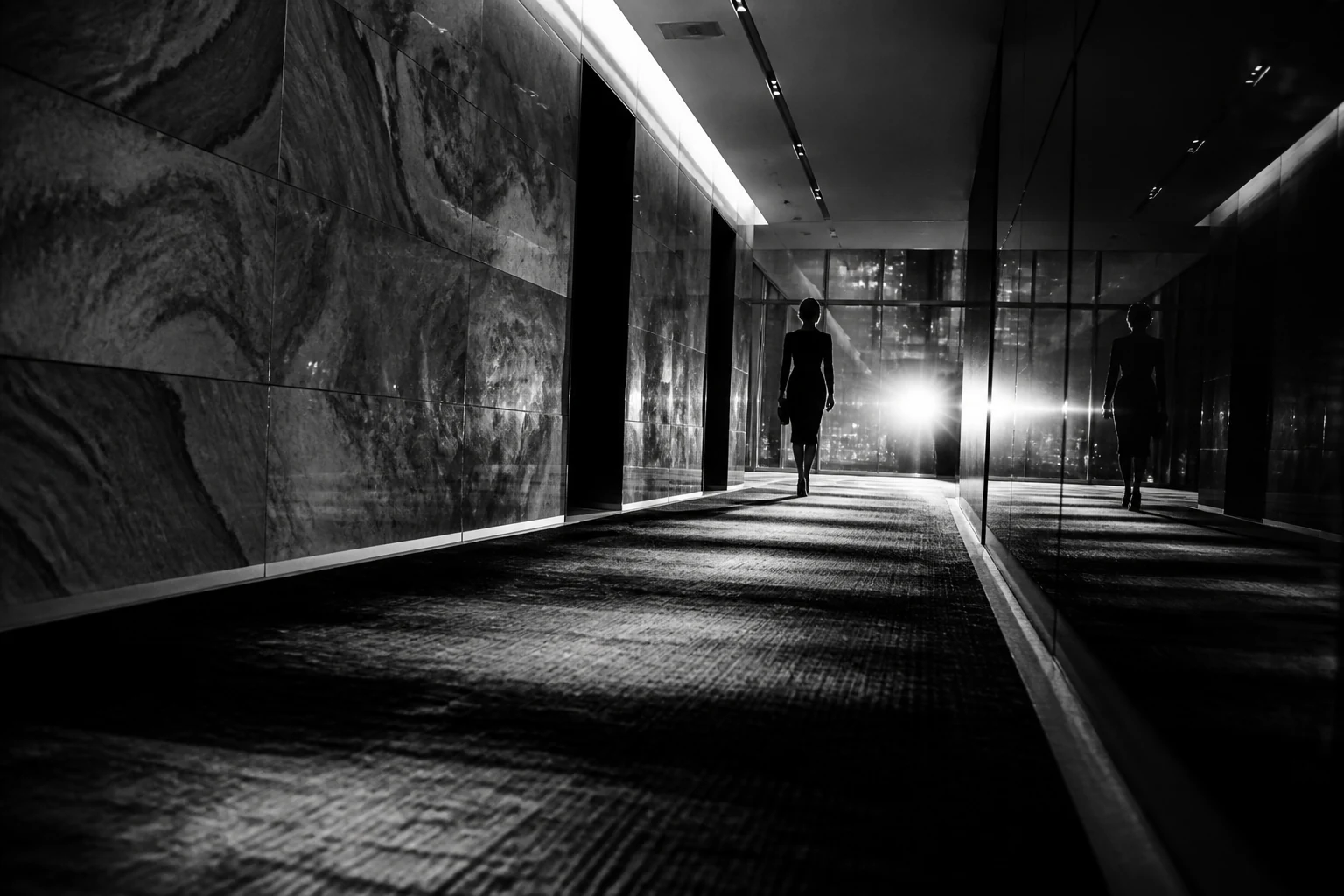
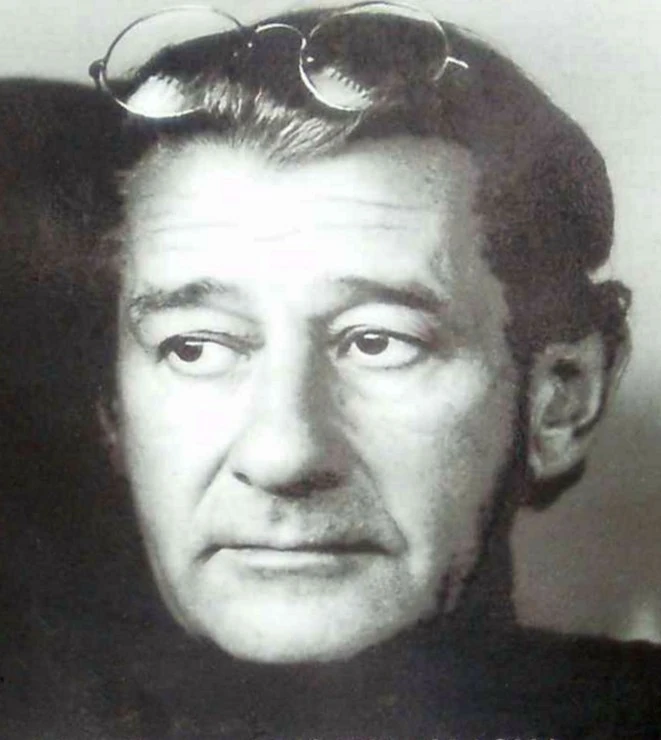
Newton turned fashion photography into a theatre of power. His heroines do not simply wear clothes: they control the space, the gaze and the plot. But that force always exists inside a male direction, a commercial system and a visual language that at once liberates a woman and turns her into an object of fantasy.
Editorial thesis
Newton's significance rests on the convergence of fashion photography, eroticism, portraiture, the language of cinema and social provocation. He destroyed the passive model of feminine elegance, but his images continue to provoke argument about the male gaze, fetishisation, class, violence and the commercial production of desire.
Reader question
Why do Newton's women appear simultaneously strong, dangerous, independent and entirely constructed by a male fantasy?
The core subject is Helmut Newton, his fashion editorials, nudes, portraits, advertising, Polaroids, books and public persona.
The Berlin apprenticeship with Yva is treated as the key professional foundation laid before his forced emigration.
June Newton / Alice Springs is presented as a photographer, art director, book editor and co-author of the family's visual archive.
Female power in the frame is analysed together with the male gaze, fetishisation and commercial direction.
The historical context of Nazism, Jewish emigration and post-war cosmopolitanism is not used as a simplified psychological explanation of the eroticism.
Lifetime prints, magazine publications and contemporary exhibition prints require separate checks of provenance.
All images require a rights review with the Helmut Newton Foundation, Condé Nast, the publisher, the brand and the photographer of any documentation.
Short answer
Helmut Newton was born on 31 October 1920 in Berlin to a Jewish family. Between 1936 and 1938 he trained in photography at the studio of Yva. After Nazi persecution he left Germany, reached Singapore and then Australia, where he opened a studio in Melbourne in 1946.
In 1961 Newton began working regularly for French Vogue. Through the 1970s and 1980s he formed a recognisable language of strong women, night streets, hotels, luxurious interiors, mirrors and staged eroticism. The books White Women, Sleepless Nights, Big Nudes and SUMO fixed his museum and publishing canon.
1. Berlin, a Jewish family and an early visual environment
Newton was born Helmut Neustädter in Berlin-Schöneberg. His father owned a button factory and the family belonged to the city's Jewish bourgeoisie.
Weimar Berlin combined cabaret, fashion, cinema, sexual freedom and abrupt social modernisation.
That environment later became part of Newton's visual myth, although his mature style was formed only after emigration.
2. Yva and a professional apprenticeship
From 1936 to 1938 Newton trained under the well-known Berlin fashion photographer Yva.
In her studio he studied light, work with a model, fashion composition and the commercial commission.
Yva, a Jewish photographer, was later deported and murdered by the Nazis; her role must be preserved as an authorial legacy in its own right.
3. Emigration, Singapore and Australia
In December 1938 Newton left Berlin and travelled via Trieste to Singapore.
After a brief spell working as a photographer he was interned by the British authorities and sent to Australia.
He served in the Australian army during the war and took Australian citizenship in 1946.
4. The Melbourne studio
In 1946 he opened his own studio in Melbourne, photographing fashion, theatre and portraits.
The Australian work gave him commercial stability and experience of managing commissions.
The international fashion system, however, remained concentrated in London, Paris and New York.
5. June Browne / Alice Springs
Newton met the actress June Browne in 1947 and married her in 1948.
Under the name Alice Springs she began her own photographic career in 1970.
June was art director of White Women and Newton's subsequent books, and after his death she completed the opening of the foundation in Berlin.
6. London Vogue and the return to Europe
In the late 1950s Newton worked under contract for British Vogue but was dissatisfied with the constraints of studio fashion.
He returned to Australia and then moved back to Europe.
The period taught him that a strong fashion image must look like a scene of life, of cinema or of private observation.
7. French Vogue, 1961
In 1961 Newton took up a permanent position at French Vogue.
Paris gave him access to haute couture, the streets, hotels, nightlife and editorial freedom.
It was in the 1960s that his recognisable language of fashion in life took shape.
8. Paris, the street and fashion in life
Newton preferred to place clothing in the city, in a car, a hotel, a stairwell, a beach or a private interior.
He wanted fashion photography to resemble a film still, a portrait or a preserved memory.
Clothing became part of behaviour and of a social script rather than a separate catalogue.
9. The woman as a figure of power
His models are tall, upright, physically confident and often look at the viewer without deference.
They occupy space, drive cars, wear men's suits and dominate male figures.
Yet the heroine's power is organised by the photographer and the commercial system, so liberation and objecthood coexist.
10. The cinematic frame
Newton used lighting reminiscent of film noir, hard shadow and an unresolved plot.
The frame frequently implies an event before or after the moment of exposure.
Unlike Bourdin, Newton more often preserves a whole character and their social power.
11. Mirrors, hotels and double observation
The mirror makes it possible to include the photographer, the camera, a second figure or a concealed part of the space.
The hotel room creates an atmosphere of temporary luxury, anonymity and covert observation.
The viewer is at once invited in and exposed as a voyeur.
12. Paparazzi logic
Some editorial series imitate photographs of pursuit, of scandal or of a private scene glimpsed by chance.
The staging looks like a document, although every detail is controlled.
That tension between plausibility and theatre became one of the key methods of fashion storytelling.
13. Sadomasochistic and fetishistic imagery
Leather accessories, high heels, collars, prostheses, nudity and physical domination appear regularly in his work.
These motifs translate fetish culture into luxury fashion.
A contemporary reading must distinguish artistic provocation, the models' consent and the commercial use of images of power.
14. The male gaze and the problem of the liberated woman
Newton maintained that he loved strong women and avoided the image of the victim.
Critics, including feminist writers, pointed to objectification, undressing and the staging of a woman for male pleasure.
The force of his legacy lies precisely in the unresolved nature of that conflict: the woman appears as a subject and at the same time remains a constructed spectacle.
15. White Women
White Women appeared in 1976 and was Newton's first major authored publication.
It combined fashion, the nude and erotic staging without a clear generic boundary.
June Newton acted as art director of the book, establishing the model for their later publishing collaboration.
16. Sleepless Nights
Sleepless Nights of 1978 continued the mixture of fashion, portraiture and unsettling sexuality.
The title underlines a nocturnal, psychologically agitated atmosphere.
Magazine images were rethought as the sequence of an autonomous book.
17. Big Nudes
Big Nudes of 1980 used the full-length frontal figure at enlarged scale.
The series alluded to the police photographs of terrorists then circulating in Germany.
The naked body becomes at once a monument, an identification document and an object of control.
18. Naked and Dressed
In the early 1980s Newton photographed the same models first clothed and then naked in an identical pose.
The comparison shows that clothing and nudity are different costumes of social power.
Polaroids were used especially intensively to match pose and light precisely.
19. Sie Kommen
The diptych Sie Kommen shows a group of women walking towards the camera clothed and then naked.
In both versions they retain a confident stride and full control.
The work became one of the best-known statements of Newton's model of female power.
20. Paris streets and nocturnal glamour
Newton's Paris at night joins luxury, danger, emptiness and artificial light.
The heroine appears to be taking part in an unknown criminal or sexual plot.
The city becomes not a backdrop but a mechanism of social status and desire.
21. Portraits of the famous and infamous
Newton photographed actors, artists, politicians, designers and members of high society.
He was interested not in psychological softness but in the public mask, in power and in bodily confidence.
The portrait often looks like an encounter between two strong authorial images.
22. Margaret Thatcher and the political portrait
The 1991 portrait of Margaret Thatcher emphasises the hardness of the face and a controlled pose.
Newton offers no intimate access; he reinforces the political armour.
The image shows that his language of power applies well beyond fashion and eroticism.
23. David Bowie, Andy Warhol and the public persona
Newton worked with people who had already built their own visual myth.
The photograph becomes a negotiation between the sitter's style and the author's direction.
His frames rarely expose a celebrity; more often they make the persona still more concentrated.
24. Self-portrait with wife and models
The 1981 self-portrait includes Newton with a camera, June, and a nude model in a mirrored space.
The frame shows the production situation, voyeurism and the division of roles inside the studio.
June looks at the scene as witness, editor and an independent subject.
25. Alice Springs as a photographer
June Newton began photographing in 1970, when she stood in for her husband on a shoot after he fell ill.
Her portraits generally use natural light, a direct gaze and less theatrical direction.
The story of the couple should not turn Alice Springs into an appendix to Newton: her archive has artistic value of its own.
26. Us and Them
The project Us and Them combines reciprocal portraits of Helmut and June with images of other people.
It presents family life as a constant exchange of photographic roles.
The work dismantles the one-sided model of the male photographer and the observed woman, though it does not remove the difference in the scale of their careers.
27. Advertising and A Gun for Hire
Newton called himself a gun for hire, stressing his professional readiness to work to a brief.
He photographed for fashion houses, magazines and manufacturers of the most varied goods.
A client's constraints became an occasion to make an image that looked freer than ordinary advertising.
28. Chanel, Yves Saint Laurent, Versace and Mugler
Clients used Newton's language of force, sexuality and risk to build a brand.
He did not dissolve into a house's identity but brought his own recognisable world.
This produced the modern model of the authorial fashion photographer as co-author of a luxury image.
29. The Polaroid as a visual notebook
Newton used Polaroids to check light, composition, pose and narrative idea.
The foundation describes them as a kind of sketchbook.
The 1992 publication Pola Woman made the test image an object in its own right.
30. SUMO
SUMO was published by Taschen in 1999 in an edition of 10,000 copies.
Its monumental format required a special metal stand designed by Philippe Starck.
The book turned a photographic archive into a luxury object and a new kind of publishing monument to an author.
31. Monte Carlo, Chateau Marmont and a cosmopolitan way of life
Helmut and June lived between Paris, Monte Carlo and Los Angeles.
Chateau Marmont became a winter base and part of Newton's Hollywood visual world.
Cosmopolitan life increased his access to celebrities and at the same time became part of his public brand.
32. The car, speed and male mythology
Newton loved cars and regularly used them as a symbol of status, risk and sexual autonomy.
The car becomes a stage, an object of fetish and an extension of the body.
It is also part of a traditional male mythology of control that his female characters sometimes appropriate for themselves.
33. Colour and black-and-white photography
Newton's black-and-white work is associated with film noir, the police archive and hard graphic form.
Colour produces cold luxury, artificial skin and magazine intensity.
He chose the process according to the character of the story rather than building an identity around a single technique.
34. Studio labour, assistants and collective production
The shoots required models, stylists, hair and make-up, assistants, retouchers, editors and a production team.
Newton retained authorial control, but his complex scenes were the result of collective labour.
The history of photography should name June, the assistants and the editorial teams, not only the figure of the genius.
35. The Helmut Newton Foundation
The foundation was established in Berlin in the autumn of 2003 and opened in the summer of 2004.
It occupies the former Landwehrkasino beside Bahnhof Zoo — the building Newton saw as he left Berlin.
The foundation holds the archives of Helmut Newton and Alice Springs and mounts a changing exhibition programme.
36. Private Property and The Living Room
The permanent display Private Property shows cameras, props, early photographs, the library and a reconstruction of the Monte Carlo office.
After the contents of the Monaco apartment were transferred, the foundation created The Living Room as a second permanent space.
In 2026 Private Property was temporarily closed from 5 January to 23 April for a renewal of the display.
37. Archive, prints and rights
The archive includes negatives, Polaroids, contact sheets, publications, personal material and photographs by Alice Springs.
An exhibition print and a magazine reproduction may carry different credit lines.
A rights review must take account of the Foundation, Condé Nast, Taschen, the brand, the museum and the author of any particular installation photograph.
38. Criticism: power, class, race and the body
Newton's world belongs predominantly to a white, wealthy, European and American elite.
A woman's power is often expressed through beauty, youth, slenderness, luxury and the ability to control others.
A contemporary reading should ask which bodies are admitted to the image of power and which remain outside the frame.
39. The legacy in contemporary fashion photography
Newton influenced Steven Meisel, Mario Testino, Ellen von Unwerth, Steven Klein, Mert & Marcus and many advertising systems.
His visual clichés — the long leg, the severe suit, hotel noir, the mirror, the flash and the dominant woman — have been copied many times over.
Productive inheritance means working with relations of power and with narrative, not merely reproducing surface sexuality.
40. Conclusion
Helmut Newton made fashion photography a space of power, risk and social theatre.
He created an image of a woman who looks back and is able to dominate the scene, yet remains inside the direction of male desire.
His principal legacy is not the erotic style in itself but the understanding of the fashion image as a complex staging of body, class, observation and control.