photographer profile
Peter Lindbergh
Humanity, Cinema, and the Unmaking of Ideal Beauty
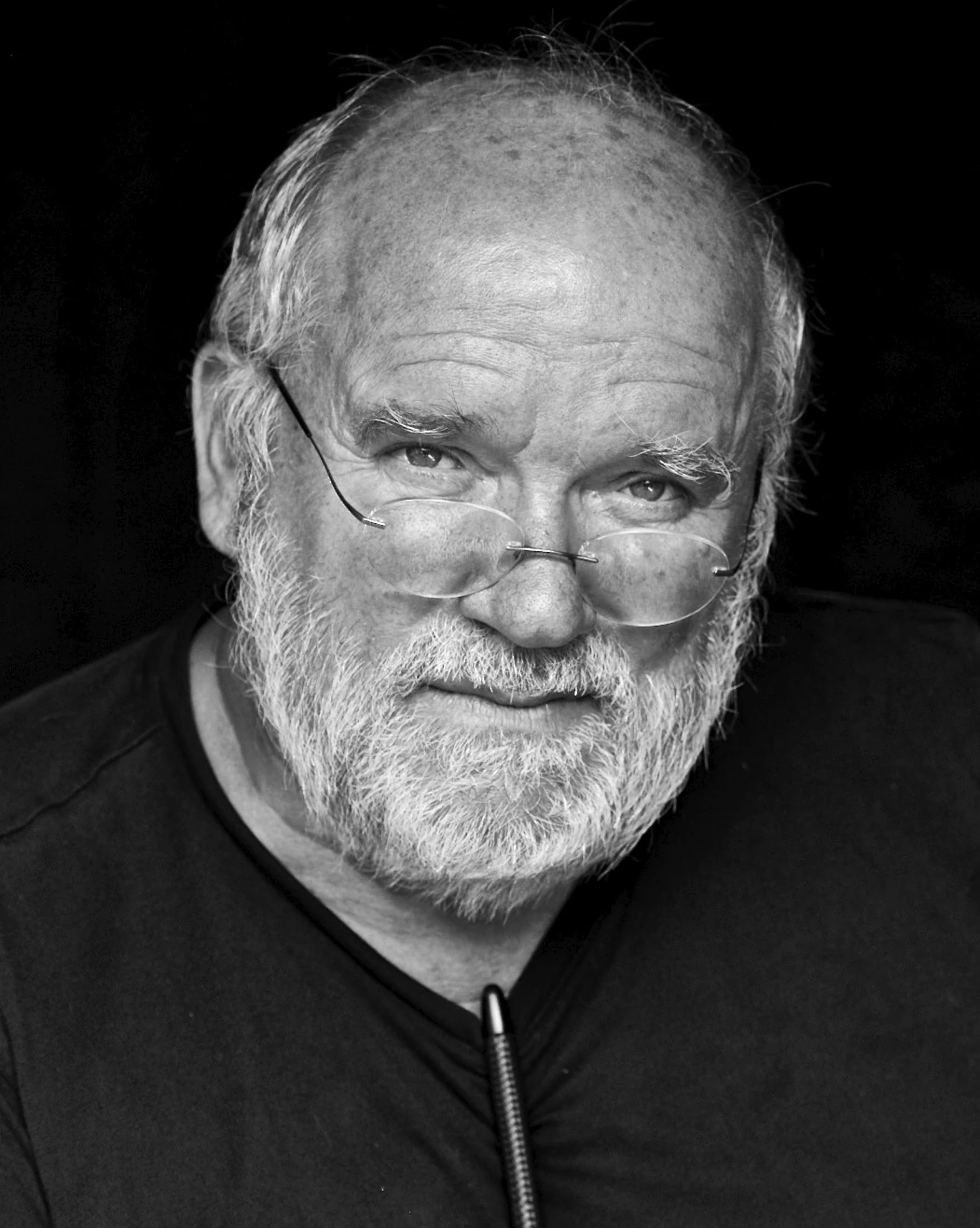
“Lindbergh changed fashion photography by rejecting polished perfection and allowing the model to remain a person—with age, fatigue, humour, hesitation, and an inner life. His photographs feel unforced, yet their apparent ease is built with exacting cinematic control.”
Editorial thesis
Lindbergh’s importance lies not in naturalness as the absence of direction, but in a new kind of direction: less cosmetic armour, more character, movement, group chemistry, and cinematic time. His humanist image of women must also be read alongside the supermodel economy, luxury branding, and the photographer’s authority over casting and representation.
Reader question
How did a white shirt, an industrial shoreline, restrained retouching, and the chemistry of a group become a new global language of fashion?
The core subject is Peter Lindbergh: fashion editorials, portraiture, advertising, films, books, and exhibitions.
The emergence of the supermodel is treated as a collective result involving photographers, models, editors, stylists, magazines, agencies, designers, television, and music.
“Natural beauty” is examined critically: Lindbergh’s images remained carefully cast, lit, styled, edited, and printed.
His resistance to excessive retouching is discussed alongside makeup, lighting, selection, printmaking, and editorial control.
Collaborations with Dior, Alaïa, Armani, Prada, and other houses are treated as co-productions of fashion image-making.
Every image requires a rights review involving the Peter Lindbergh Foundation, publications, brands, publishers, and installation photographers.
Executive summary
Peter Lindbergh was born on 23 November 1944 in Leszno and grew up in Duisburg. He studied painting in Berlin and Krefeld, assisted photographer Hans Lux, established his own practice in Düsseldorf, and moved to Paris in the late 1970s.
His 1988 Santa Monica editorial and the January 1990 British Vogue cover helped define the visual identity of the supermodel era. He worked for Vogue, Harper’s Bazaar, Pirelli, Dior, and major fashion houses, directed films, and spent the final years of his life curating Untold Stories as a personal statement on his own archive.
1. Leszno, Duisburg, and the industrial Ruhr
Lindbergh was born in wartime Poland and raised in Duisburg. Harbours, factories, steel structures, and the overcast Ruhr landscape later became an emotional counterpoint to couture.
2. Painting, Van Gogh, and art school
He studied art in Berlin and Krefeld and was drawn to Van Gogh and the experimental art scene. Photography came after painting and retained his attention to surface, light, and the expressive human gesture.
3. Assisting Hans Lux
In the early 1970s Lindbergh worked as Hans Lux’s assistant. The experience gave him the technical discipline of a commercial studio and an understanding of editorial production.
4. Stern and German fashion photography
Work for Stern brought him into the international magazine system. Although he shared pages with Helmut Newton, Guy Bourdin, and Hans Feurer, his own approach became less fetishistic and more narrative.
5. Moving to Paris
Lindbergh relocated to Paris in the late 1970s. The city offered access to couture, major magazines, and a sophisticated culture of art direction.
6. Cinema as an underlying structure
His photographs draw on German Expressionism, film noir, neorealism, and Fritz Lang. Even a still portrait often feels suspended between two moments of a larger story.
7. The industrial location
Factories, docks, steelwork, empty beaches, and peripheral urban spaces replaced the luxury interior. The friction between couture and rough environment returned fashion to the present tense.
8. The white shirt as a uniform of character
A plain men’s shirt, coat, or vest stripped away decorative status. Clothing became a frame for personality rather than the sole object of admiration.
9. Santa Monica, 1988
For American Vogue, Lindbergh photographed a group of young models in white shirts on a California beach. The magazine declined the proposed cover, yet the series became a manifesto for a new generation.
10. British Vogue, January 1990
The cover with Naomi Campbell, Linda Evangelista, Tatjana Patitz, Christy Turlington, and Cindy Crawford fixed the collective image of the supermodel era. It presented chemistry rather than five isolated icons.
11. Freedom! ’90
George Michael cast the Vogue models in Freedom! ’90. The music video moved the fashion image into mass culture and confirmed models as celebrities in their own right.
12. The supermodel as a collective production
The phenomenon emerged through photography, agencies, magazines, designers, television, and music. Lindbergh’s authorship matters, but it should not erase the agency of the women or the editorial teams around them.
13. Naomi Campbell and racial visibility
Lindbergh repeatedly placed Naomi Campbell at the centre of the group and treated her as a commanding individual presence. Yet visibility within a famous image did not resolve the industry’s structural exclusion of Black models.
14. Tatjana Patitz
His long collaboration with Tatjana Patitz reveals a commitment to individual character rather than a disposable rotation of faces. Her presence became foundational to his visual world.
15. Black-and-white photography
Monochrome removed some of fashion’s seasonal colour coding and heightened skin, gaze, fabric, and atmosphere. It was not a withdrawal from fashion, but a strategy for making it less temporally disposable.
16. Light, grain, and print texture
Window light, overcast weather, directed sources, and visible grain produced a documentary register. The apparent simplicity depended on precise decisions about exposure, process, and print.
17. Resisting idealised retouching
Lindbergh spoke publicly against erasing wrinkles and digitally rebuilding faces. His position broadened the visual vocabulary of beauty, even though every final image still depended on selection, styling, lighting, makeup, and editing.
18. Age and the face
He photographed Charlotte Rampling, Helen Mirren, Jeanne Moreau, and other mature women without converting age into simulated youth. Time became part of the face’s authority.
19. The Pirelli Calendar
Lindbergh photographed multiple Pirelli Calendars and became the first photographer invited for a third edition. His calendars shifted the project away from conventional pin-up imagery and towards portraiture and filmic storytelling.
20. A Different Vision on Fashion Photography
The book and exhibition project organised four decades of work around an alternative ethics of fashion photography, not simply a signature black-and-white style.
21. Untold Stories
Lindbergh spent two years selecting more than 150 photographs for Untold Stories. Opening after his death, the exhibition functioned as a self-authored edit of his career.
22. Dior
He worked closely with Dior, Lady Dior, and J’Adore. In 2018 he took 80 archival and contemporary Dior looks into the streets of New York for his final major book project.
23. Alaïa
His collaboration with Azzedine Alaïa was grounded in mutual respect for the body, the structure of clothing, and the authority of the model. In black and white, the dress became an architecture of movement.
24. Armani, Prada, and other houses
Lindbergh created campaigns for Giorgio Armani, Prada, Calvin Klein, Donna Karan, and many others. His authorship often became part of a house’s identity beyond the life of a single collection.
25. Portraiture beyond fashion
Actors, musicians, and artists were photographed with the same emphasis on character and reserve. Celebrity appears less insulated by the usual public mask.
26. Film and moving image
Lindbergh directed Inner Voices, Models: The Film, Pina Bausch: Der Fensterputzer, and other projects. Film made visible his interest in voice, silence, gesture, and duration.
27. Models: The Film
The 1991 film presents models outside the frozen fashion pose. Conversation, waiting, and movement reveal how persona is negotiated between professional performance and private behaviour.
28. The Heist and narrative fashion
Stories involving robbery, pursuit, police, or urban suspense placed clothing inside action. The product belonged to a plot instead of being isolated as merchandise.
29. Woman and the humanist myth
Lindbergh aimed to depict women as autonomous and strong. Yet the idea of the “real woman” can itself become a new norm, concealing how rigorously the industry selects bodies and faces.
30. Makeup, styling, and invisible labour
Minimal makeup does not mean no labour. Hair, makeup, styling, casting, production, and post-production created the naturalness that audiences read as spontaneous.
31. The Peter Lindbergh Foundation
The Foundation preserves the archive, supports exhibitions and publications, and manages licensing. It continues to shape the photographer’s posthumous canon.
32. Estate, prints, and rights
A vintage print, a later lifetime print, a magazine page, and a contemporary exhibition print are materially and legally different objects. Publication requires precise credit lines and provenance.
33. Legacy in contemporary fashion photography
His influence is visible in restrained makeup, industrial settings, group portraiture, and emotionally charged monochrome. Surface imitation, however, can turn humanism into another commercial template.
34. Conclusion
Peter Lindbergh made humanity a new luxury code. His achievement was not the absence of direction, but the ability to direct without extinguishing character, dignity, and inner life.