photographer profile
Richard Avedon
Movement, psychological pressure and photography as a public image
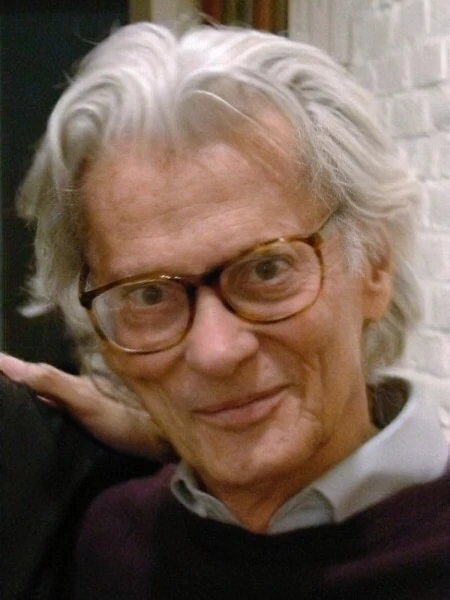
Avedon took fashion out of the static studio and into the street, giving the body back its movement, and then reversed course: a white background, a frontal gaze, a large format — and nowhere for a person to hide. Both systems rest on the same thing: the pressure a photographer exerts on the person being photographed.
Editorial thesis
Avedon changed the visual language of fashion through movement, the street and cinematic energy, and then radicalised the studio portrait with a white background, frontality and large format. His legacy demands formal analysis and a critique of the power held by the photographer, the magazine and the institution at the same time.
Reader question
How did one photographer make a model's leap a symbol of freedom, and a motionless person against a white background an almost painful psychological event?
Fashion is examined together with Harper's Bazaar, Vogue, editors, models and art directors.
The portrait is not treated as an objective disclosure of personality: it is the result of an encounter, a selection and authorial power.
In the American West is analysed together with questions of class, region and typology.
The documentary series on civil rights, Vietnam and power are separated from fashion mythology.
All images require separate rights checks with The Richard Avedon Foundation, the publisher, the museum or the photographer documenting them.
Short answer
Richard Avedon was born on 15 May 1923 in New York. After serving as a photographer in the Merchant Marine he studied under Alexey Brodovitch at the Design Laboratory and began working for Harper's Bazaar in the 1940s. In 1966 he moved to Vogue. His key projects include Dovima with Elephants, Observations, Nothing Personal, The Family and In the American West.
1. New York, family and early visual experience
Avedon grew up in a Jewish family connected to the clothing business. Early exposure to garments, advertising and family photographs shaped his understanding of the image as a form of social presentation.
2. The Merchant Marine
During the Second World War Avedon served in the Merchant Marine and photographed sailors' identity cards. The repeated frontal scheme became an early education in the face, in difference and in seriality.
3. Alexey Brodovitch and the Design Laboratory
After the war he attended Brodovitch's Design Laboratory. The essential lessons were montage, the rhythm of the page, movement and the demand for visual novelty.
4. Harper's Bazaar
From the 1940s Avedon worked for Harper's Bazaar. Carmel Snow and Brodovitch gave him room to turn fashion photography from the display of a dress into a scene of contemporary life.
5. Paris after the war
In the streets of Paris, in cafés, at the circus and in urban spaces, models moved, laughed, ran and engaged with their surroundings. Fashion became a narrative about freedom and modernity.
6. Dovima with Elephants
The 1955 photograph of Dovima in a Dior dress designed by Yves Saint Laurent, flanked by elephants, became one of the emblems of fashion photography. The contrast between the slender figure, the fabric and the massive animals is built as graphic choreography.
7. Movement as an editorial language
Leaps, turns and blur destroyed the idea of the model as a mannequin. Avedon used movement not for the sake of spontaneity but as a strictly directed form.
8. Suzy Parker and Dorian Leigh
Working with professional models demonstrated the importance of performance skill. Pose, face and movement were produced jointly, although the final selection remained the power of the photographer and the magazine.
9. Funny Face and the Avedon myth
The 1957 film Funny Face drew in part on the figure of the fashion photographer associated with Avedon. He advised the production and created visual material, but the character on screen is not a biographical portrait of him.
10. The white background
In his portraits Avedon increasingly eliminated the interior and symbolic props. The white background is not neutral: it strips a person of familiar social cover and amplifies every movement of face and body.
11. Psychological pressure
Avedon could work at length, talk, provoke or wait for fatigue to set in. The resulting expression should not be taken as a hidden truth about the person: it is a state produced by the photographic encounter.
12. Marilyn Monroe
The 1957 portrait of Marilyn Monroe is often read as the moment the public mask falls away. A more accurate reading is the contrast between the familiar stage persona and the frame Avedon selected, showing a tired, motionless state.
13. The Duke and Duchess of Windsor
In the well-known portrait the Duke and Duchess of Windsor appear tense and sorrowful. The story that Avedon deliberately told them of a dog's death is frequently repeated and requires careful checking against sources.
14. Observations
The 1959 book Observations, with text by Truman Capote, turned portraits of the cultural elite into an authored sequence. The book became a form in its own right rather than a collection of magazine work.
15. Nothing Personal
The 1964 book made with James Baldwin juxtaposed power, celebrity, civil rights, psychiatric institutions and American contradictions. Its montage built a political argument through the collision of images.
16. The Civil Rights Movement
Avedon photographed civil rights activists and events in American politics. These images show that his practice extended far beyond fashion and celebrity.
17. Vietnam
He worked in Vietnam and photographed American servicemen, victims of the war and political figures. The documentary work retained his interest in the frontal face but stood in a different ethical situation from the studio portrait.
18. The move to Vogue
In 1966 Avedon left Harper's Bazaar and began working for Vogue. His influence extended into a new period of fashion, sexuality and celebrity culture.
19. Twiggy, Veruschka and the new fashion
In the 1960s and 1970s his images responded to youth culture, graphics, movement and the changing image of women. The studio could become an almost abstract stage.
20. The Family
In 1976 Rolling Stone published a series of portraits of the American political and economic elite under the title The Family. A single visual regime turned power into a typology of faces and bodies.
21. The large-format camera
For his later projects Avedon used an 8×10-inch camera. The slow process, the visible apparatus and the high level of detail intensified the formality of the encounter.
22. In the American West
Between 1979 and 1984 Avedon travelled through the western United States photographing workers, the unemployed, miners, farmers, teenagers and others. The project was commissioned by the Amon Carter Museum and published in 1985.
23. The white background in the West
A portable white backdrop separated each person from a specific place while preserving the traces of clothing, skin and labour. The strategy created visual intensity but removed economic and geographical context.
24. Criticism of In the American West
The series was praised for its monumentality and criticised for turning the working West into an aestheticised catalogue of vulnerability. The question is not whether the faces are 'truthful' but who was granted the right to define the image of a region.
25. Contact sheets and selection
Avedon's authorship appeared not only at the moment of shooting but in the severe choice of frame, scale, crop and sequence. A contact sheet shows the many possible versions of a single person.
26. Printing and scale
Large gelatin silver prints turned face and body into an object physically comparable to the viewer. The white field around the figure heightened the sense of both presence and isolation.
27. Versace
In the 1980s and 1990s Avedon created dynamic campaigns for Versace. They joined his early love of movement to the theatricality of the supermodels and a sexualised idea of luxury.
28. Calvin Klein and commercial culture
The commercial projects show that for Avedon the border between the authored portrait and advertising was always permeable. His language helped brands manufacture cultural status.
29. The New Yorker
In 1992 Avedon became the first staff photographer at The New Yorker. The magazine gave him a new platform for portraiture, reportage and large thematic projects.
30. Democracy
In his final years he worked on the project Democracy, photographing politicians, delegates and participants in the American electoral system. The project remained unfinished at his death.
31. The last assignment
Avedon died on 1 October 2004 in San Antonio while on assignment for The New Yorker. He continued working almost to the end of his life.
32. The studio as a collective
Behind the authorial signature stood assistants, camera operators, the darkroom, retouchers, stylists, models, editors and producers. Strict visual control was the product of a complex production infrastructure.
33. The Richard Avedon Foundation
The foundation preserves the archive, supports exhibitions, research and publications, and administers the estate and its rights. Editorial use of the images requires checking the current credit line and licence.
34. Avedon and Penn
Both photographers used studio simplification, but Penn more often built distance through form and materiality, whereas Avedon intensified confrontation, movement and psychological tension.
35. Conclusion
Avedon changed two large fields of photography at once: he made the fashion image alive and kinetic, and the portrait severe, frontal and publicly psychological. His central lesson is not the white background as a style but the understanding of photography as an active encounter in which the image is always produced by someone.