photographer profile
Steven Meisel
Transformation, narrative and the fashion image
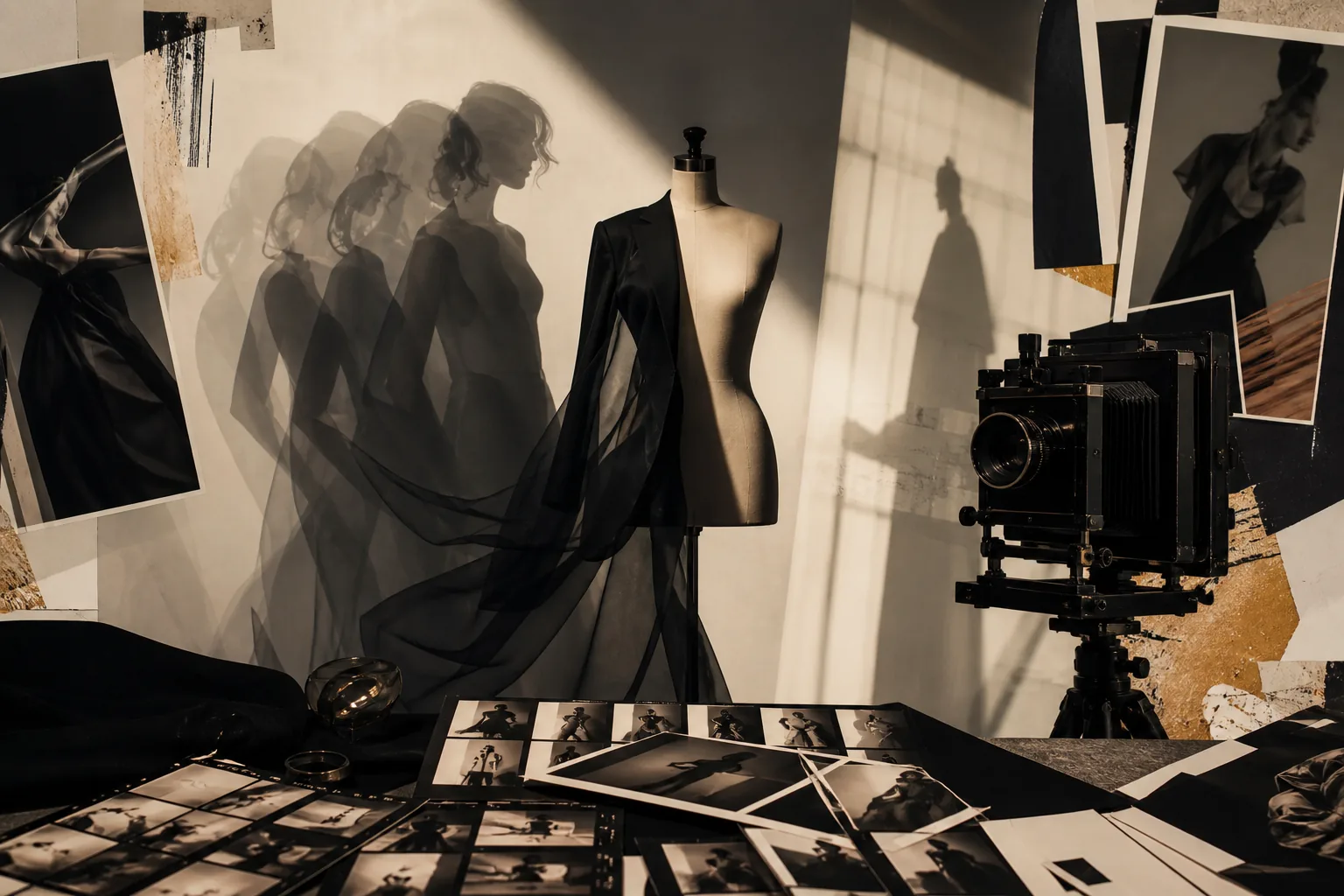
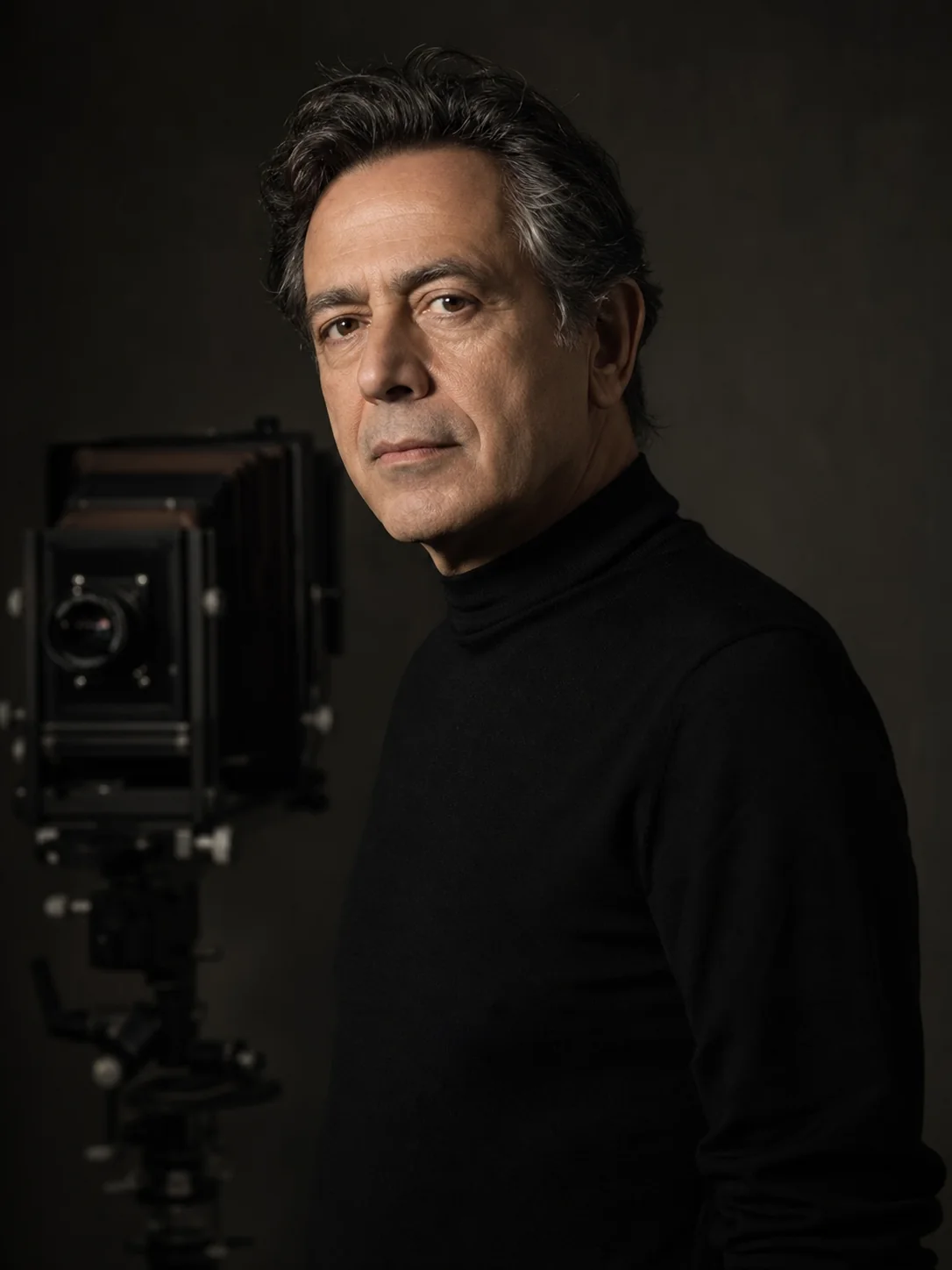
Meisel turned fashion photography into a machine of transformation: the model becomes a character, the magazine becomes a stage, and fashion history, cinema and mass culture become material for a new image.
Editorial thesis
Steven Meisel's influence does not depend on one recognisable technique but on the opposite quality: an ability to change visual language for each task while retaining authorship. His constant subject is transformation — of model, genre, era, gender, status, magazine and the very idea of the fashion image. 1
Reader question
How can a photographer remain one of fashion image-making's most influential authors for decades without relying on one fixed signature light, palette or composition?
Short answer
Because Meisel builds not a surface style but a system for producing character. Casting, fashion knowledge, narrative, team, art direction and magazine context matter more than a repeatable visual effect. 1
1. New York: models came before the profession
Steven Meisel grew up in New York with an almost obsessive interest in models and fashion magazines. In an interview published by British Vogue for the 1993 exhibition, he recalled skipping school as a teenager to visit studios and see models, often carrying a simple camera with him. 3
This beginning matters: his early obsession was not primarily technical. It was directed at people, faces, clothing and the fashion ecosystem itself. The camera arrived inside an already developed visual curiosity.
2. Fashion drawing as a school of looking
Before professional photography, Meisel learned through drawing and fashion illustration. That path helps explain his sensitivity to silhouette, proportion, fabric and the way clothes alter the body. 1
An illustrator must decide quickly what matters most in an image. Meisel carries that ability into photography: sometimes the shoulder line is decisive, sometimes a hand gesture, sometimes a face takes control of the entire frame.
3. Why knowing fashion matters more than one photographic technique
It is almost impossible to separate Meisel's photography from his knowledge of fashion. British Vogue describes his encyclopaedic understanding of designers, models and fashion history, while Aperture notes his ability to process references ranging from painting to cinema and mass culture. 3
His style is therefore not reducible to lighting, lens choice or colour grading. His real technique is context: knowing which image already exists and deciding whether it should be quoted, broken or translated into another genre.
4. Early magazines and the shift from illustrator to photographer
The shift into photography did not erase the illustrator's way of thinking. Early magazine work gradually placed Meisel inside an industry where an image must show clothing, create a character and sustain an entire spread at the same time. 1
A central principle emerges: a fashion photograph does not have to behave like runway documentation. It can become a scene, psychological episode, parody, portrait or a frame from a film that never existed.
5. Franca Sozzani: the editor as a co-author of risk
Franca Sozzani became editor-in-chief of Vogue Italia in 1988 and turned the magazine into an experimental platform. Vogue remembers her early period as a conscious rejection of formula, with Steven Meisel becoming one of the defining photographers of that project. 11
Their alliance matters as an editorial system. Sozzani allowed fashion photography to address plastic surgery, race, environmental disaster, violence and the fashion industry itself. Meisel was able to work not merely as a supplier of beautiful pictures but as the author of long visual arguments.
6. Vogue Italia: a rare long-term alliance between photographer and magazine
Art + Commerce records the exceptional length of Meisel's relationship with Vogue Italia: from the late 1980s into the 2010s he produced a vast number of covers and lead editorial stories for the magazine and Sozzani. 1
For magazine history this is almost a laboratory case. One photographer changes for decades alongside one publication, and the publication changes alongside him. Style is defined not by repeating the same picture but by a shared habit of transformation.
7. 1993: one year that reveals the scale of the method
The exhibition Steven Meisel 1993: A Year in Photographs revealed a scale that is hard to grasp from isolated iconic images: in 1993 alone Meisel shot twenty-eight international Vogue covers and more than one hundred editorial stories. 11
The number matters not as a record but as evidence of mental speed. Within a single year, strict portraiture, grotesque humour, street energy, salon elegance, male and female characters, different cities and different magazine tasks coexist.
8. Madonna: Sex — when fashion image becomes a cultural event
Madonna's 1992 book Sex brought photography, celebrity, sexuality, book-as-object and art direction into one media system. The photographs were made by Meisel, with Fabien Baron involved in the art direction and design of the project. 1
For Meisel it offered an unusually extended period within a single visual world rather than a short editorial assignment. Afterwards, his ability to construct sequences of roles, bodies and scenes becomes especially clear.
9. Anglo-Saxon Attitude: London as a casting of characters
In 1993 Meisel worked professionally in London for the first time on the story later known as Anglo-Saxon Attitude. Isabella Blow participated in casting from her social circle, including Stella Tennant, Bella Freud, Plum Sykes and other figures of British fashion culture. 1
The strength of the series is that London never becomes a postcard. Place, social code, oddness and humour matter more than tourist signs. The city is read through characters.
10. Linda Evangelista: the model as an instrument of transformation
Linda Evangelista became one of Meisel's central creative partners. He repeatedly used her ability to transform radically, moving from classical beauty to characters who could become almost unrecognisable. British Vogue emphasises the longevity of their collaboration and Evangelista's willingness to throw herself into the process. 3
A central Meisel theme appears here: identity is not fixed. The model does not simply 'represent herself'; she becomes material for transformation together with clothing, makeup, hair and staging.
11. Naomi, Christy, Kristen, Stella: different forms of presence
Naomi Campbell, Christy Turlington, Kristen McMenamy, Stella Tennant and other models do not dissolve into one ideal type in Meisel's work. He builds different modes of presence: majestic, nervous, comic, fragile, cold or aggressive. 1
That is the difference between strong casting and a collection of attractive faces. The photographer must understand not only appearance but the range of behaviour a person can produce in front of a camera.
12. Casting: seeing a character before the industry does
Meisel is often described as having an exceptional eye for casting. In British Vogue he speaks about seeing something in a person that the person may not yet see in themselves. 3
Within fashion, this is considerable power: the photographer participates not only in making an image but in making careers. Casting therefore always has an ethical dimension because it influences whose appearance becomes visible and turns into a new standard.
13. Photography as a script, not a display of clothes
Edward Enninful recalled that working with Meisel taught him to move beyond the single correct fashion gesture and build a character: who is this woman, where does she live, what is her story? 1
That short memory describes the method precisely. A garment becomes a costume for a character rather than an inventory item. Even an advertising photograph can imply a life before and after the shutter.
14. Cinema, painting and fashion archives as internal montage
Meisel's internal archive is extraordinarily broad: cinema, old Hollywood, magazine history, painting, erotic photography, the street and pop culture. Aperture notes that he moves freely among references and genres rather than remaining attached to a single visual signature. 2
The danger of this method is styling for the pleasure of recognising a quotation. Meisel's strongest work avoids that trap because the reference is a starting point rather than the final result.
15. Black and white: classicism without calm
Meisel's black-and-white photographs often look classical but rarely calm. Aperture observes that in the 1993 work monochrome supports a classical frame while allowing gestures to remain lively, strange and almost improvisational. 2
Black and white therefore does not automatically mean 'timeless elegance'. It can intensify documentary feeling, sexuality, anxiety or theatricality depending on how the model behaves.
16. Colour: from beauty to psychological signal
Colour in Meisel can function in entirely different ways: cosmetic, acidic, salon-like, cinematic or almost clinical. What matters is not a signature palette but the psychological regime of the story. 1
This is another argument against the idea of a single visual preset. Meisel's consistency lies in world-building, not in repeating the same colour treatment.
17. Body, gesture and the instant between poses
Even in highly constructed work, Meisel values the living gesture — the instant when a model seems to move beyond a pre-learned pose. Aperture describes the 1993 bodies as walking, leaning, laughing and behaving with less ceremony than a traditional luxury image might demand. 2
That is why his strongest photographs cannot be copied through pose alone. The photographer must create conditions in which the character actually begins to exist.
18. Fabien Baron: the image meets magazine architecture
The collaboration with Fabien Baron demonstrates that the fashion image is not formed only on set. Crop, scale, typography, page sequence and advertising systems can radically change what a photograph means. VANSMITHLAB's Baron archive already treats him as an important Meisel collaborator. 1
Photographer and art director work on different levels of the image: one creates the event inside the frame, the other decides how that event lives on a page, cover, poster or campaign.
19. Edward Enninful: a character needs an inner life
Edward Enninful described Meisel as someone who demanded that a stylist invent an inner life for the character rather than merely dress the model well. That logic is central to editorial photography. 1
When a character exists only for clothes, the image ends at the surface. Once an imagined biography appears, clothing can mean choice, class, role, protection, desire or mask.
20. Prada: transformation as a constant identity
Meisel's long relationship with Prada makes his interest in transformation especially visible. In the Spring/Summer 2025 campaign Carey Mulligan appears as multiple different heroines; Prada explicitly builds the concept around the actor's ability to become 'other'. 13
It is almost an ideal Meisel model: the brand maintains identity not through sameness but through controlled instability. Every image is different while the whole series speaks about one idea.
21. The campaign as a series rather than a single frame
The 2025 Prada campaign shows how photography can work as a serial form. Individual images are linked to texts by Ottessa Moshfegh and become a cast of characters rather than a seasonal lookbook. 13
For VANSMITHLAB this is a useful bridge among photography, literature, art direction and branding: an image system can be layered and exist across several media at once.
22. Makeover Madness: fashion photographs its own obsession
Makeover Madness for Vogue Italia turned the plastic-surgery clinic into a fashion stage. Vogue later remembered the project as a satirical response to contemporary obsession with bodily intervention. 11
Its strength is that the fashion industry criticises its own environment from within. Its weakness is equally clear: if aestheticisation becomes too seductive, the critique may begin to sell the very thing it mocks.
23. The 2008 Black Issue: representation and the limits of the special issue
In July 2008 Vogue Italia published the Black Issue, with editorial photography featuring Black models shot by Meisel. The issue became an important moment in discussions of representation and quickly became collectible; The Met also uses it as material for studying fashion-media history. 11
At the same time the special issue exposes the limit of the gesture: diversity should not exist only inside an exceptional issue. Edward Enninful later argued directly that different perspectives should be normal every month rather than isolated in a special edition.
24. Water & Oil: when editorial metaphor becomes controversial
After the BP oil spill in the Gulf of Mexico, Vogue Italia published an editorial in which Kristen McMenamy appears coated in oil and washed onto a shore. Vogue later cited the work among the social subjects addressed during Sozzani and Meisel's era. 11
The metaphor is immediate, which is exactly why it demands caution. A real environmental catastrophe becomes a highly produced fashion image, making the boundary between critique and aestheticisation exceptionally thin.
25. Horror Movie and the social subject inside a fashion magazine
Horror Movie in 2014 used the language of thriller and domestic violence as the basis of a fashion story. Vogue places it among Sozzani and Meisel's provocative projects in which fashion collided with painful social subjects. 11
Such work cannot be judged only by visual power. We must ask what the image clarifies, whom it uses as a symbol, and whether real trauma has been converted into decorative tension.
26. Provocation: a strong tool or a shortcut to effect
Provocation in Meisel's work rarely exists by itself; it is usually embedded in satire directed at media, beauty, celebrity or the fashion industry. But visual force does not remove responsibility. 1
The useful lesson for a contemporary photographer is not 'shock like Meisel'. It is that the subject should have a structural relationship to the system in which the work appears. Otherwise provocation quickly becomes styling.
27. Why Meisel rarely explains his own images
Meisel is famously private: he gives few interviews, maintains a low public profile and exhibits relatively rarely. Aperture and Photo London both emphasise the contrast between his enormous influence and his limited public visibility. 5
In an era when a photographer is often expected to become their own media channel, that position feels almost anomalous. The images operate without constant authorial explanation, forcing viewers to read them through magazines, campaigns, models and cultural context.
28. Steven Meisel 1993: an exhibition as the portrait of one working year
The exhibition Steven Meisel 1993: A Year in Photographs in A Coruña rejected the conventional retrospective and concentrated on one working year. More than one hundred portraits and an immense volume of magazine work were brought together. 1
The format is unusually precise for Meisel. Instead of a legend built from 'greatest hits', we see production: the number of shoots, changing genres, recurring models, different editorial contexts and an extraordinary speed of transformation.
29. Photo London 2026: a rare public return
In May 2026 Photo London named Steven Meisel its Master of Photography and presented a rare selection of London portraits connected to his first professional assignment in the city. The exhibition itself was notable because Meisel so rarely presents public shows. 5
This late institutional recognition matters: fashion photography is treated not as an ephemeral service industry but as an autonomous history of images worthy of archival and exhibition reading.
30. The main legacy: the photographer as director of a system of transformations
Meisel's main legacy is not a single 'look'. It is the ability to turn fashion production into a system of roles: model as actor, clothing as costume, stylist as co-author of character, art director as architect of the page, magazine as platform and photographer as director of the whole chain. 1
Copying Meisel through retro glamour or an elaborate set therefore misses the point. The lesson is intellectual flexibility: every project requires a new world, but that world must be constructed precisely enough that one frame feels like a fragment of a larger story.